Behind the Scenes: How Bookmakers Calculate Boxing Odds

Behind the Scenes: How Bookmakers Calculate Boxing Odds
When two fighters step into the ring, it’s not just their power, technique, and endurance being tested. Long before the first bell rings, bookmakers have already run the numbers, analyzed the matchup, and set the odds — the figures that reflect each boxer’s chances of winning and determine how much bettors can earn. But how exactly do bookmakers calculate these odds, and what factors shape them? Here’s a look behind the curtain at the mix of data, psychology, and market forces that drive boxing betting.
Data and Statistics: The Foundation
Everything starts with data. Bookmakers gather massive amounts of information about both fighters: past performances, win-loss records, knockout percentages, age, reach, weight class, and stamina. They also study stylistic matchups — for instance, how a defensive counterpuncher fares against an aggressive brawler.
These details feed into complex statistical models that estimate the probability of different outcomes. Modern sportsbooks often use machine learning and predictive analytics to identify patterns that human analysts might miss. But numbers alone don’t tell the whole story — they need interpretation.
Læs også:



The Human Element: Form, Motivation, and Context
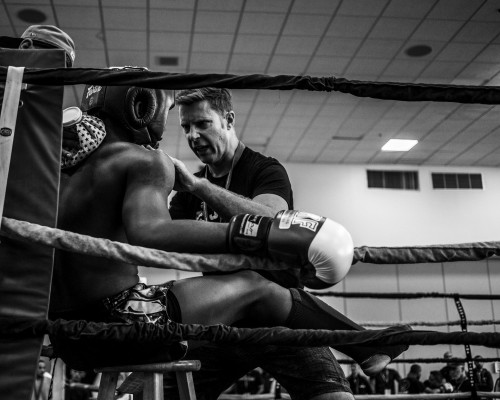
Even the most advanced models can’t capture every variable. That’s where human judgment comes in. A fighter recovering from an injury, switching trainers, or competing in hostile territory might perform differently than the stats suggest. Motivation also matters — a title fight or a hometown crowd can bring out a boxer’s best (or worst).
Bookmakers therefore monitor news, interviews, and social media closely to gauge a fighter’s mindset and physical condition. A subtle clue — like a change in training camp or a comment from a coach — can shift the odds significantly.
The Market Effect: Odds as a Living System
Once the initial odds are released, the market takes over. Bettors start placing wagers, and bookmakers adjust the odds in response. If heavy money flows toward one fighter, the odds are tweaked to balance the action and limit the bookmaker’s exposure. The goal isn’t necessarily to predict the winner perfectly, but to ensure a profit regardless of the outcome.
That’s why odds often move in the days or hours before a fight. A sudden surge of bets on an underdog can cause the bookmaker to shorten that fighter’s odds and lengthen the favorite’s. It’s a dynamic system where both data and human behavior constantly interact.
The Margin: The Bookmaker’s Built-In Edge
Even when odds appear fair, bookmakers always include a built-in advantage known as the “margin” or “overround.” This ensures that the total implied probabilities of all possible outcomes add up to more than 100%, guaranteeing a profit over time.
For example, if two fighters are evenly matched, each with a 50% chance of winning, the bookmaker might offer odds equivalent to 1.90 on each side instead of a true even-money payout. That small difference covers their risk and forms the foundation of their business model.
Prop Bets and Alternative Markets
Boxing betting today goes far beyond simply picking the winner. Sportsbooks offer a wide range of prop bets: whether the fight ends by knockout or decision, which round it finishes in, or whether a particular fighter will be knocked down. These markets require even more detailed analysis, as they depend on fighting styles, pace, and judging tendencies.
Bookmakers use both historical data and expert insight to price these bets. A boxer known for going the distance will have lower odds for a knockout win, while a heavy puncher might offer higher payouts — but also greater uncertainty.
Technology and the Future of Odds-Making
Advances in data analytics and artificial intelligence are transforming how bookmakers operate. Algorithms can now update odds in real time during a fight — a practice known as “live betting.” Every punch, round, and momentum shift can instantly influence the probabilities.
Still, even with all the technology in the world, boxing remains unpredictable. One perfectly timed punch can change everything in a split second — and that unpredictability is what keeps both fans and bettors hooked.
Balancing Science and Intuition
Setting boxing odds is a craft that blends mathematics, psychology, and market awareness. Bookmakers walk a fine line between objective data and subjective judgment — and between managing risk and maximizing profit.
For bettors, the odds they see aren’t random numbers but the result of deep analysis and constant adjustment. And for bookmakers, it’s an ongoing battle to stay one step ahead — of the fighters, the data, and the bettors trying to beat the system.
Læs også: