Equal Terms for All: Rules for Equipment Control and Standardization in Darts

Equal Terms for All: Rules for Equipment Control and Standardization in Darts
When two players face each other on the dart stage, the outcome should depend on skill, focus, and composure—not on differences in equipment. That’s why standardization and equipment control play a crucial role in professional darts. Behind the colorful flights and iconic dartboards lies a detailed set of rules designed to ensure that everyone competes on equal terms.
Why Standardization Matters
In darts, even the smallest variation in equipment can make a difference. A slight change in the tip’s length, a shift in weight distribution, or an uneven dartboard surface can alter the flight path. To prevent unfair advantages, international organizations such as the Professional Darts Corporation (PDC) and the World Darts Federation (WDF) have established precise standards for darts, boards, and setup.
The goal is simple: to create consistent playing conditions, whether a match takes place in New York, London, or Tokyo. This consistency allows players to practice with confidence, knowing that tournament conditions will match what they experience at home.
Rules for Darts
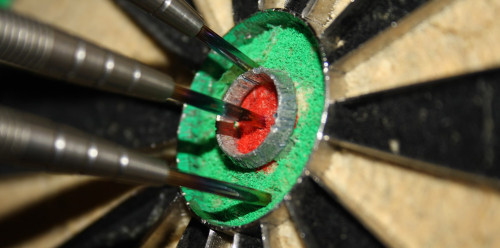
According to official regulations, darts may weigh up to 50 grams, though most professionals use darts between 20 and 26 grams. The total length cannot exceed 12 inches (30.5 centimeters), and all materials must be safe and non-damaging to the board.
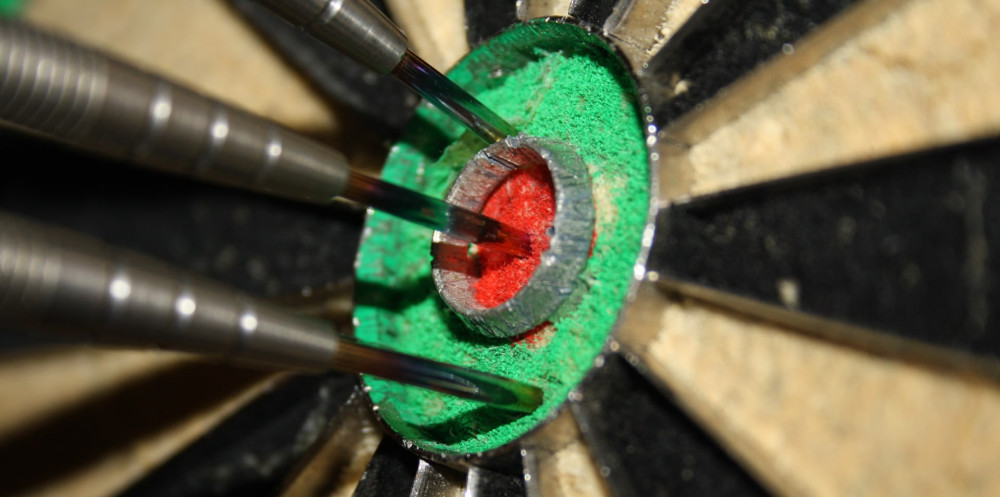
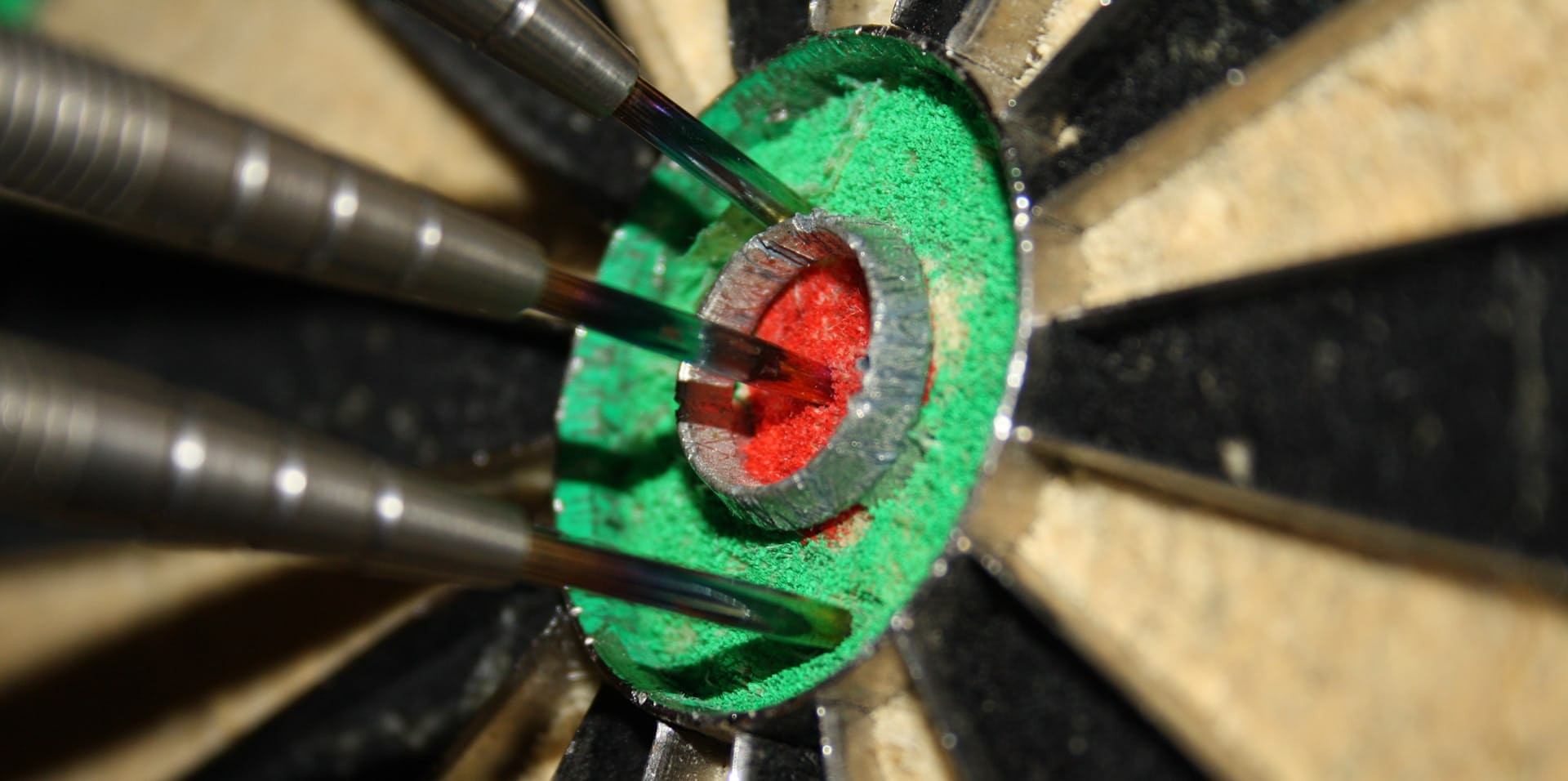
Each dart consists of four main parts—tip, barrel, shaft, and flight—and all must be securely attached so they don’t loosen during play. Players often customize their darts to suit their grip and throwing style, but before a tournament, referees may inspect and measure them to ensure compliance with the rules.
Even small details, such as the shape of the flight or the material of the shaft, can influence aerodynamics. That’s why players are free to choose their equipment within the same boundaries—but not beyond them.
The Dartboard: Precision in Millimeters
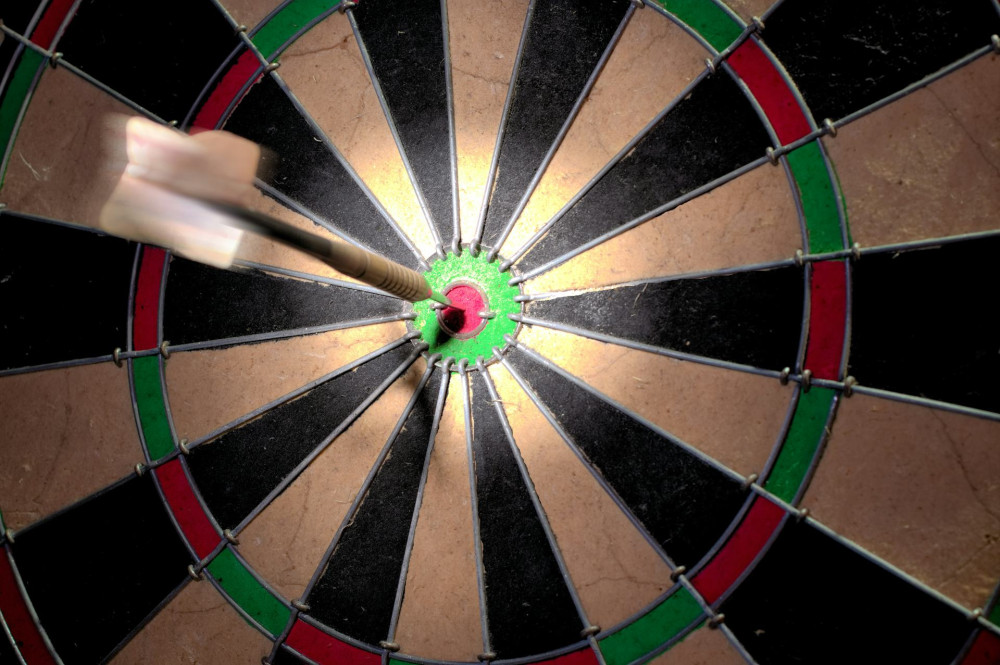
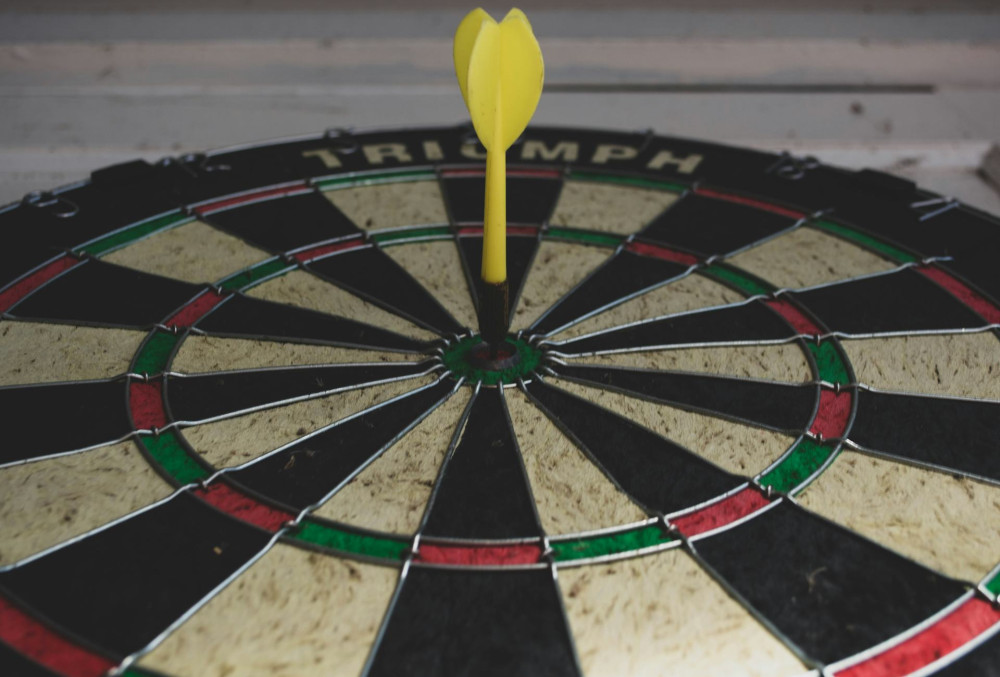
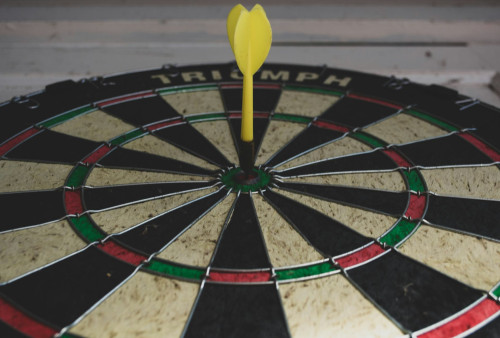
The standard dartboard used in professional tournaments is made from tightly packed sisal fibers. The scoring segments are divided by thin metal wires, and every measurement is exact: the bullseye has a diameter of 12.7 millimeters, and the double and triple rings are positioned with millimeter precision.
The board must be mounted so that the bullseye is 5 feet 8 inches (1.73 meters) above the floor, and the throwing line—known as the oche—must be 7 feet 9¼ inches (2.37 meters) from the face of the board. These measurements are checked before every event, and even small deviations can lead to a setup being rejected.
Equipment Checks Before and During Tournaments
Before an official match begins, referees and technical staff perform a series of checks. They measure the board’s height, verify the throwing distance, and ensure that lighting is even and glare-free. Players’ darts may also be weighed and measured to confirm that they meet the standards.
If a player changes equipment during a tournament, the new set must be approved before use. This prevents anyone from gaining an advantage by switching to darts with different weight or balance mid-match.
The Role of Technology in Modern Darts
Although darts is a traditional sport, technology has become an important part of maintaining fairness. Electronic scoring systems and high-speed cameras are increasingly used to monitor accuracy and automatically record throws. These tools help detect errors and ensure that every board meets the required specifications.
Manufacturers have also introduced new materials that make boards more durable and darts more stable. Yet, no matter how advanced the technology becomes, all equipment must still be approved by the governing bodies before it can be used in official play.
Læs også:
Fairness as the Foundation
The rules for equipment control and standardization ultimately come down to fairness. When everyone competes under the same conditions, darts becomes a true test of skill rather than equipment.
For both professionals and amateurs, it’s reassuring to know that the game is built on clear, transparent standards. It’s this combination of precision, tradition, and fairness that makes darts a sport where every millimeter counts—but where everyone starts from the same line.
Læs også: