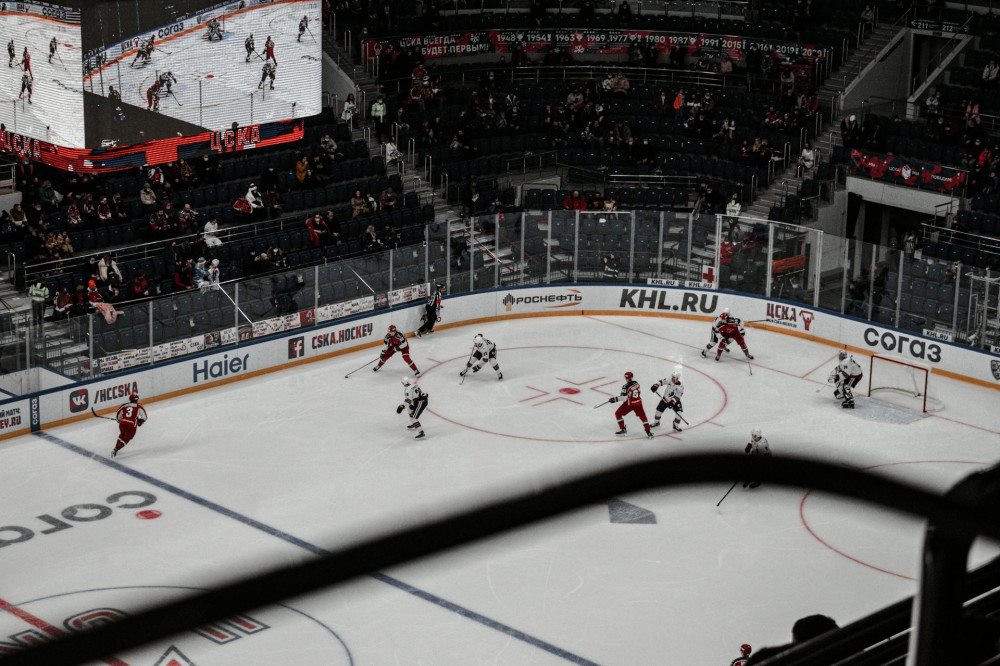
Goalies, Goal Scorers, and Probabilities: How Bookmakers Calculate Hockey Odds

Goalies, Goal Scorers, and Probabilities: How Bookmakers Calculate Hockey Odds
When the puck drops and the game begins, it looks like a contest of speed, skill, and grit. But behind the scenes, bookmakers are crunching numbers, running simulations, and adjusting probabilities to predict who will win, who might score, and how many goals will be tallied. Hockey is one of the most unpredictable sports, which makes setting odds both a science and an art.
Statistics as the Foundation
The first step for any bookmaker is data—lots of it. Every shot, save, penalty, and faceoff is recorded and analyzed. Metrics like shots on goal, save percentage, power-play efficiency, and faceoff win rate form the backbone of the mathematical models that estimate the likelihood of different outcomes.
A team with a goalie saving 93% of shots clearly has a better chance than one whose netminder stops only 88%. But numbers never tell the whole story. Hockey is full of randomness—a puck deflecting off a skate, a post hit at the wrong time, or a lucky bounce that changes everything. That’s why bookmakers adjust their models for factors like home-ice advantage, travel fatigue, injuries, and even the importance of the game.
The Goalie Factor
The goaltender is often the single most influential player in a hockey game. A hot goalie can steal a win, while an off night can sink even the best team. Bookmakers pay close attention to who’s starting in net and how their recent form looks.
If a team’s starting goalie is injured or rested, the odds can shift dramatically—sometimes within hours of puck drop, once lineups are confirmed. This volatility is one reason hockey odds tend to move more than those in many other sports.
Goal Scorers and Offensive Firepower
At the other end of the ice are the goal scorers—the players who can change a game with one shot. Bookmakers don’t just estimate how many goals a team might score; they also assess who is most likely to score them. Factors like shot volume, power-play time, and the opposing defense’s quality all come into play.
A player who shoots frequently but hasn’t scored in a while might still be valued highly in the models, since probability suggests a breakthrough could be coming. Balancing raw data with intuition is part of what separates experienced oddsmakers from the rest.
Probabilities and Margins
Once probabilities are calculated, they’re converted into odds. If a team is judged to have a 50% chance of winning, that translates to even odds—2.00 in decimal format, or +100 in American odds. But bookmakers add a margin—their built-in profit—so the actual odds might be slightly lower, say +90 or 1.90.
This margin varies by league and by bookmaker. In major markets like the NHL, margins are typically small because competition is fierce and data is abundant. In smaller leagues or international tournaments, margins are higher to account for greater uncertainty.
Live Odds and Real-Time Adjustments
Hockey moves fast, and so do the odds. When a team scores, takes a penalty, or loses a key player mid-game, the live odds shift instantly. Algorithms update probabilities in real time, reflecting the new game state.
Some bookmakers now use machine learning to refine these models. By analyzing thousands of past games, the systems learn how similar situations have played out before, improving their ability to predict what might happen next. It’s where technology and sport meet in real time.
The Human Element
Despite all the data, human judgment still matters. Bookmakers employ analysts who track team form, coaching strategies, and even player psychology. A team finishing a long road trip might be physically and mentally drained—something that raw statistics can’t always capture.
That’s why setting hockey odds is a blend of data, experience, and instinct. The numbers provide structure, but the human touch gives context.
Læs også:
When the Ice Settles
In the end, odds aren’t about predicting the future with certainty—they’re about estimating probabilities as accurately as possible. Hockey will always have its surprises: a fluky bounce, a last-second goal, or a goalie standing on his head.
Behind every betting line lies hours of analysis, modeling, and judgment. It’s a world where math meets adrenaline—and where the smallest detail can shift the balance between profit and loss.
Læs også: